

trip summary - mongolia 2026
Mystic Mongolia - The Gobi Desert
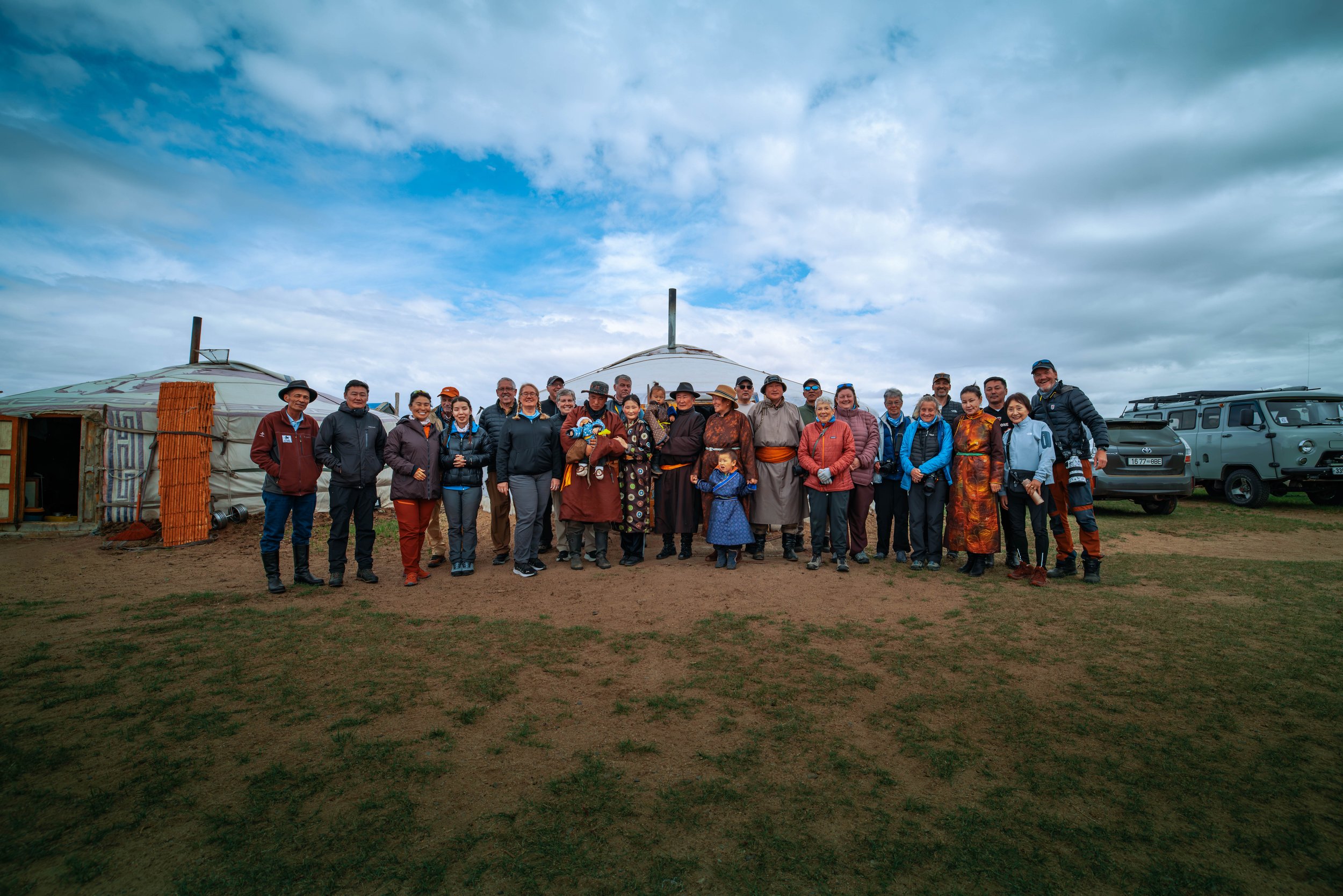
Some places stay with you long after you leave. Mongolia’s Gobi Desert is certainly one of those places. After months of preparation, we finally gathered in Ulaanbaatar, met our incredible local team, and began the journey south into one of the most remote and captivating landscapes on Earth. Almost immediately, the pace changed—roads stretched endlessly toward the horizon, the skies seemed immense, the green steppes spread in all directions, and the vastness of the Gobi reminded us just how wonderfully wild this corner of the world still is. Soon enough, the urban chaos of "UB" seemed a distant memory.
Over the days that followed, we explored a landscape full of surprises. We watched the first and last light move across the sweeping dunes of Khongoryn Els, which quickly became a highlight for many in the group. Standing among those immense golden dunes, photographing camels wandering through the desert, and watching the landscape constantly shift with the changing light was unforgettable. We even experienced the raw power of the Gobi firsthand when a sudden sandstorm rolled across the dunes, transforming the scene completely and reminding us just how wild and unpredictable this place can be.
From there, the landscapes continued to surprise us. We wandered through the dramatic cliffs of Vulture Canyon, watched the desert glow at Bayanzag—the legendary Flaming Cliffs—as the sun disappeared, and marveled at the significance of the incredible fossil discoveries made there. At Tsagaan Suvarga (White Stupa), we were treated to one of the most spectacular sunrises of the trip, as the colourful cliffs slowly came to life beneath the morning light. Each location offered something completely different, from towering rock formations and ancient landscapes to open grasslands where wildlife and nomadic life continue to thrive.
But the Gobi was about much more than scenery. Some of the most memorable moments happened in between the big landscapes: sharing meals, laughing with our local team, spending time with one of our drivers' families, and experiencing the incredible hospitality that makes travelling here so special. One evening, surrounded by new friends, we shared stories, laughter, and songs with locals—a spontaneous and unforgettable moment that captured the warmth and generosity of Mongolian culture.
And then there were those quiet moments that are impossible to forget—standing beneath a sky overflowing with stars, cameras pointed upward, watching the Milky Way stretch across the darkness above the dunes. Nights in the Gobi have a way of making you feel both incredibly small and incredibly connected to the world around you.
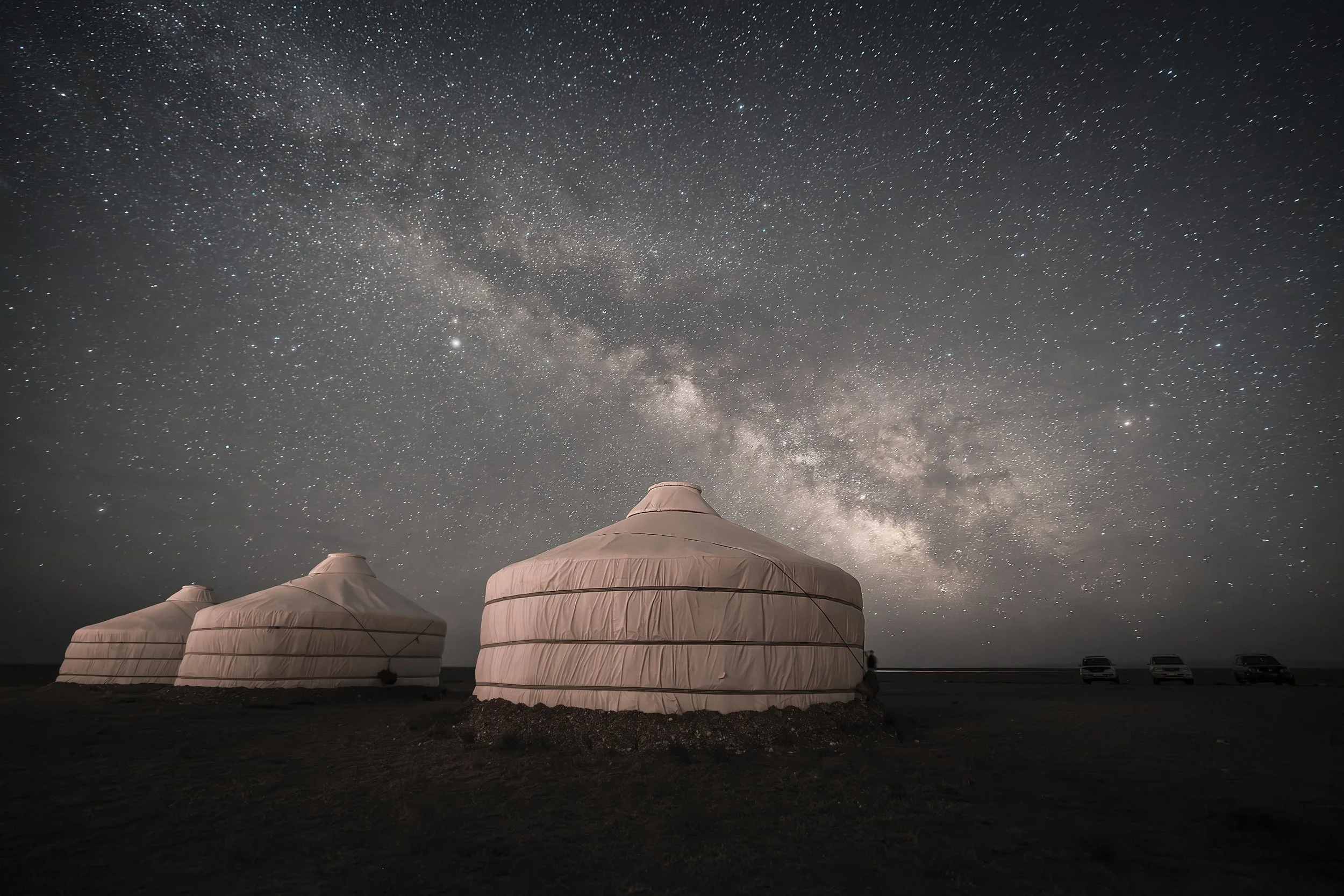
By the end of the journey, it was clear that Mongolia had given us far more than just photographs. It gave us a sense of space, connection, and perspective that’s becoming increasingly rare. Saying goodbye to our group, our guides, and this incredible corner of the world wasn’t easy—but we left with full memory cards, unforgettable stories, and a feeling that the Gobi is a place we’ll be returning to someday.
MONGOLIA WILD WEST
When you experience Western Mongolia, you change.
You begin to see the world through a different lens. You hear stories of old traditions and ways of life that have endured for generations, and through this adventure, you become part of that story. You live alongside the traditions, share in them, and leave with the feeling that a small piece of Mongolia now lives within you.
More than two years ago, we sat across from our friends here in Mongolia and shared a vision of creating an experience unlike any other, a journey that blended photography and cultural immersion into something truly meaningful. Not just a photography adventure, but an opportunity to live with local families and experience a way of life that remains deeply connected to the land.
As we headed into the wild unknown of Western Mongolia, we journeyed to the Tuvia Valley, where we spent 2 of days camping with an elder family also known as the Boss. We were welcomed as family from the moment we arrived. Tents were pitched at the foot of the mountains as we shared time with herders, horsemen, and camel keepers, capturing the essence of a landscape that has been sustained through generations of tradition and respect for the land.
We listened to the wisdom of the Boss as he shared stories and offered us everything he had. In a place this remote, generosity is not just a value this is the a way of life. As word spread through the valley, more locals came to visit. They arrived with warm smiles, curiosity, and, of course, wonderful opportunities for photography.
After a few days, we continued on to the breathtaking Khoton Lakes, a place known for both its remoteness and cultural significance. More than 15,000 petroglyphs can be found here, etched into stone centuries ago. Hunters, ibex, and scenes of everyday life were carved into the rocks, preserving stories for future generations. In many ways, they were the photographers of their time, documenting what was important to them through their artwork.
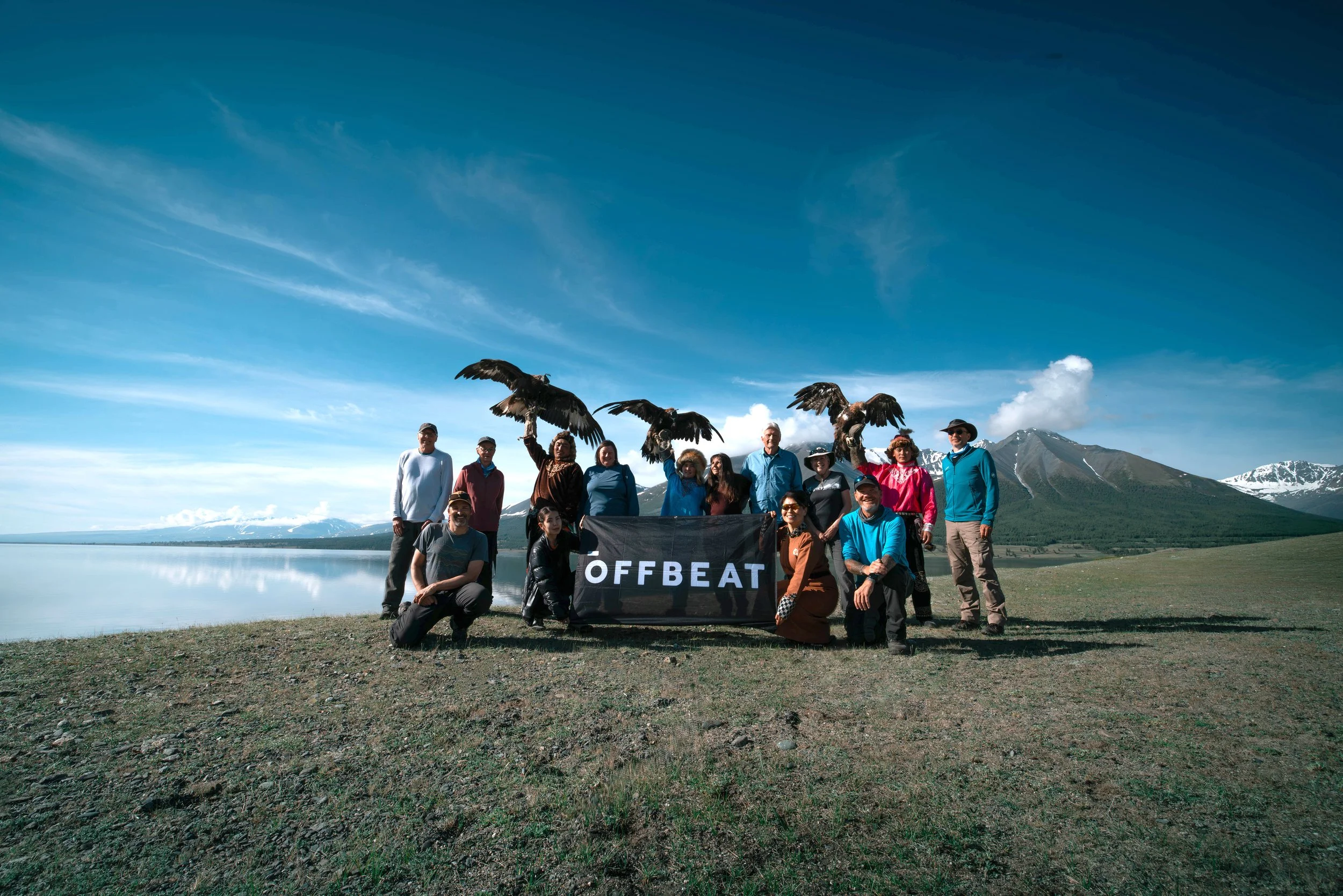
Our eagle hunters and huntress joined us here, sharing their traditions and stories during meals and throughout our sunrise and sunset sessions. As we spent time together, it became clear how these ancient traditions continue to thrive today. One was an eighth-generation eagle hunter and already passing their knowledge on to their children and preparing the next generation to proudly carry these traditions forward.
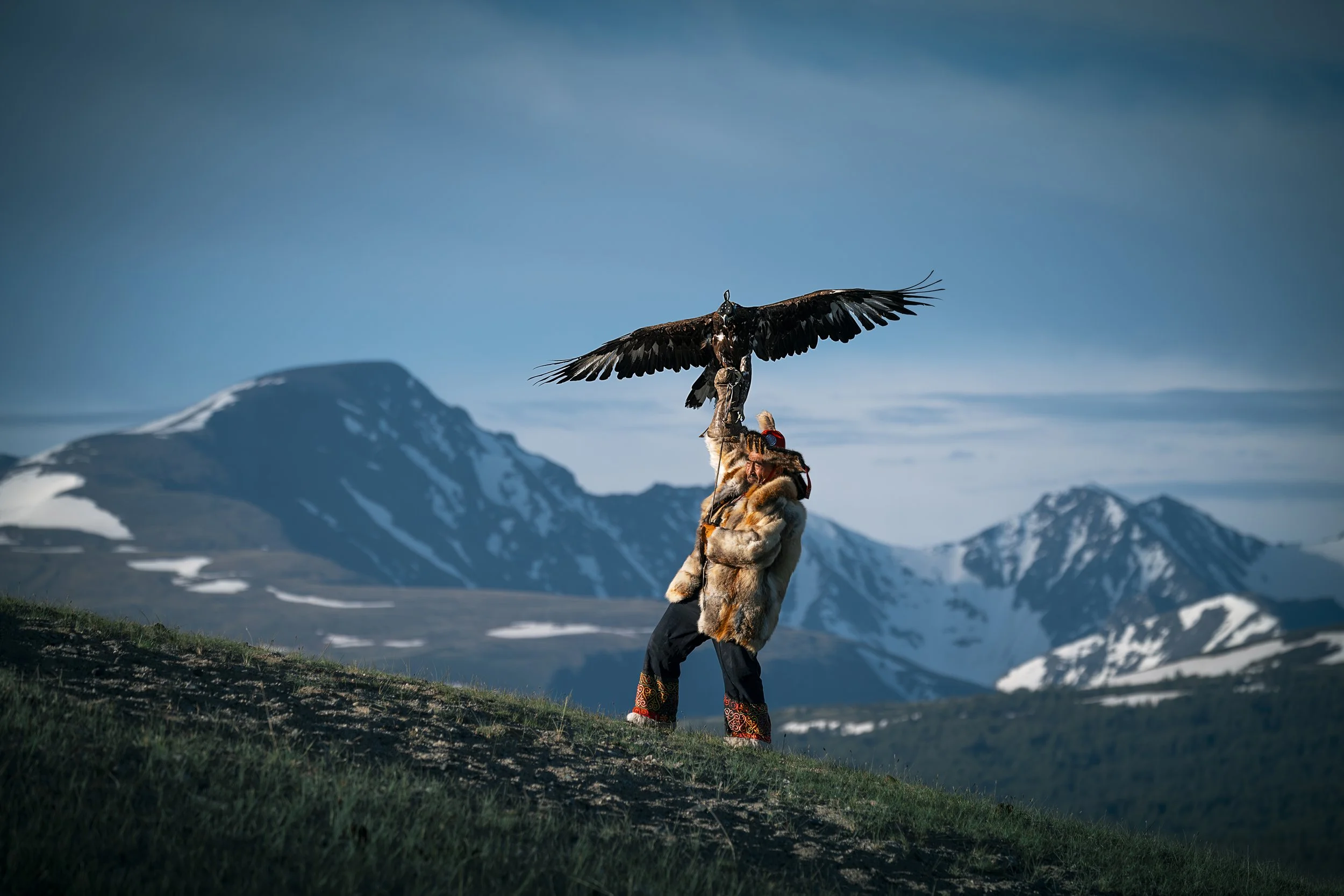
From waterfalls and mountain landscapes to horses racing across the steppe at sunset and even beneath the Milky Way the opportunities felt endless.
One of the greatest joys was watching our group come together. People from around the world, connected by creativity and curiosity, quickly became a small family. Together we shared experiences, stories, laughter, and unforgettable moments.
As our journey drew to a close, we gathered one final time in the wild. On our last evening, we sat around a bonfire on the shores of the lake as musicians played beneath storm filled skies. We sang, danced, and shared stories around the fire while the wind carried our music across the water. In these moments, it felt as though the generations who came before us were watching with approval, witnessing our connection to this place and the friendships we had formed along the way. It was a reminder that while we arrived here as visitors, we would leave carrying a small piece of Mongolia with us forever.
As our journey came to an end and we returned to the busy streets of Ulaanbaatar, one thing is clear: Western Mongolia is a rare place. It is a land where legends still feel alive and traditions remain strong. The people here carry their heritage with pride and are eager to share it with those willing to listen.
Memory cards are full, hard drives are bursting, and our hearts are overflowing after spending time with such generous people.
It's hard to say goodbye, so we won't.
Instead, we'll simply say: see you soon, Mongolia.
Safe travels, my friends.
Time to start planning 2028.